 The Calm Journal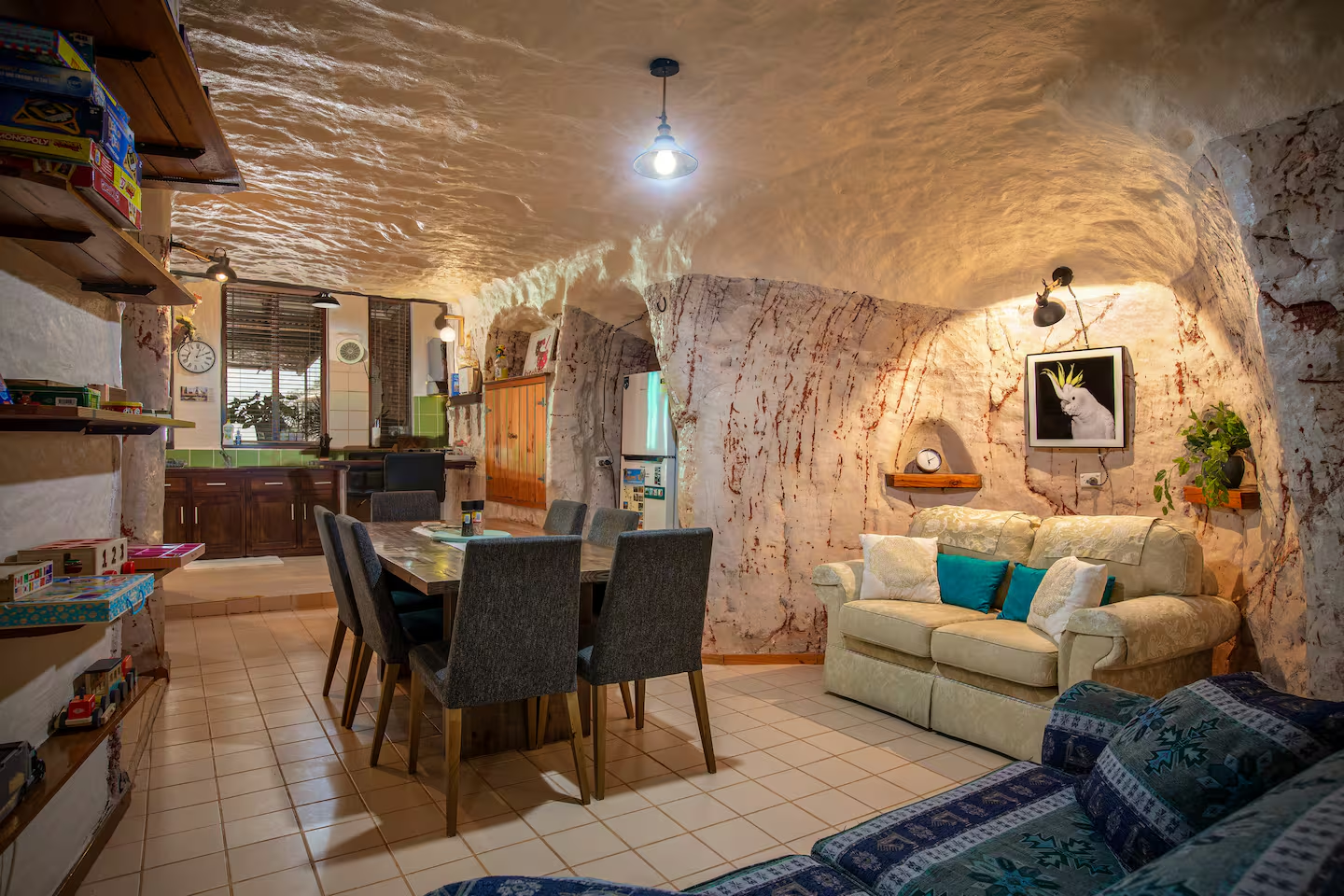
If you drove past Coober Pedy in South Australia without looking closely, you might think the place had been abandoned.
There are no skyscrapers. There are barely any trees. It’s mostly just red dust, mounds of dirt, and strange white pipes sticking out of the ground like snorkels. It looks so much like a post-apocalyptic wasteland that they actually filmed Mad Max and Pitch Black here.
But underneath your feet, thousands of people are watching Netflix, cooking dinner, and going to church.
Welcome to the “dugout” lifestyle. Here is the reality of why people live underground here, and surprisingly, why it’s actually smarter than living above ground.
Why go underground? It’s not just for aesthetics.
In most of the world, a “cave home” sounds like a primitive throwback. In Coober Pedy, it’s a technological necessity.
The temperature in this part of the Australian Outback is brutal. In the summer, it routinely hits 50°C (122°F). Above ground, your electronics overheat, the dust gets into everything, and your air conditioning bill would bankrupt you.
But once you dig about 4 meters (13 feet) deep, the earth acts as a natural insulator.
The “Passive Cooling” Hack: Regardless of how scorching it is outside, the temperature inside a dugout stays at a constant, pleasant 23°C (73°F) year-round.
- Insight: Residents here rarely pay for heating or cooling. While the rest of Australia fights rising energy costs, Coober Pedy residents just let the rock do the work.
How do you build a house inside a rock?
This is where the real value of the Coober Pedy lifestyle kicks in. In a normal city, if you want another bedroom, you have to hire an architect, buy bricks, get permits, and spend $50,000.
Here? You just hire a tunneling machine.
Historically, many homes started as opal mines. The town is the “Opal Capital of the World.” Old miners would dig for gems, and once the mine was played out, they’d realize, “Hey, this is a pretty nice square room,” and move in.
The “Renovation Lottery”: There is a local legend (which happens often enough to be true) about home renovations. If you decide to dig a new nursery for your baby, you might accidentally strike an opal seam in the wall.
- The Reality: People have literally paid for their home renovations with the gems they found while digging the new room.
What is daily life actually like?
It’s not dark and damp. That’s the biggest misconception.
Sandstone is incredibly dry. It sucks the moisture out of the air, so these homes are crisp and arid, not swampy.
- Ventilation: Remember those white pipes sticking out of the ground I mentioned earlier? Those are ventilation shafts. They ensure fresh air circulates constantly.
- Lighting: Most dugouts are built into hillsides. The front rooms (kitchen, living room) usually have windows facing outside. The bedrooms are deeper in the back—pitch black and utterly silent. It’s supposedly the best sleep you’ll ever have.
- The Internet: Yes, they have high-speed internet. The rock walls can sometimes mess with Wi-Fi signals between rooms, so you’ll see a lot of ethernet cables or mesh extenders, but digitally, they are as connected as Sydney.
The weirdest amenities
Because the whole town operates this way, the infrastructure has adapted. It’s not just homes.

- The Church: The Serbian Orthodox Church is carved entirely out of sandstone. It has a high ceiling and intricate acoustics that you can’t replicate with wood or drywall.
- The Campsite: You can pitch a tent underground.
- The Golf Course: This is the only golf course in the world with reciprocal rights to St. Andrews in Scotland… and it has zero grass. You carry a piece of fake turf around with you to tee off.
- The Fence: The town is near the “Dingo Fence,” which is the longest continuous fence in the world. Stretching over 5,600 kilometers (3,480 miles), it is significantly longer than the Great Wall of China and was built to keep dingoes away from sheep flocks in the southeast.
Is it a gimmick?
Living in Coober Pedy isn’t a tourist trap; it’s a masterclass in adaptation.
We spend so much money today trying to build “sustainable” homes with high-tech materials. But the people of Coober Pedy figured out 100 years ago that the most energy-efficient way to live in a hostile environment isn’t to fight the climate—it’s to hide from it.
If you visit, stay in an underground motel. Just don’t get spooked by the silence. When you turn the lights off down there, it is truly dark.